
The Custom Fashion Trendline · Part Two
Last week we walked through the full BoF × McKinsey luxury-client survey — craft as baseline, honest scarcity, letting clients into the making, all of it. One line kept pulling us back in the days since: exclusivity itself has been redefined, from “hard to get” to “recognised by the right people.” That’s not a minor footnote — it may be the single finding in the report that speaks most directly to bespoke work. So this week, we’re going deep on just that thread.
For bespoke tailors, pattern makers, and designers, exclusivity has always been a working reality, not a marketing effect. Ask what makes a brand feel exclusive ten years ago, and the answer was mechanical: exclusivity meant owning what others could not access. Scarcity, waitlists, and price did the work. Ask it today, and the report finds the answer has quietly shifted — from being hard to get, to being recognised by the right people. Read closely, that shift lands squarely in favour of bespoke tailoring.
Three findings are worth the attention of any tailor, pattern maker, or designer building a client relationship around custom work.
The report frames this as a move from an old model to a new one: scarcity gives way to recognition, waitlists to personalisation, visibility to community.
Here is the part worth sitting with. The report describes, in the language of management consulting, a transition that mass-luxury brands will spend years and considerable budget trying to engineer. For pattern makers and designers working in custom, most of it is simply Tuesday.
Consider the scepticism toward manufactured scarcity. A megabrand’s scarcity is a decision — a lever pulled in a planning meeting. Yours is structural. It lives in the hours of labour, the pattern cut for one body, the fitting sequence that cannot be shortcut. The report warns that fake scarcity now backfires; the corollary is that honest scarcity has rarely been more valuable.
“Low-key showing off.” — a Chinese luxury client, describing a discreet, insider-recognised label. A fair description of the custom client’s psychology in general.
Consider the challenger-brand finding. A bespoke house is, almost by definition, the challenger: small, specific, with a defined hand and no interest in saturation. The very qualities the report credits for cutting through — originality, cultural precision, a world that feels un-diluted — are the qualities that define good custom work.
The report offers two instructions worth borrowing: design exclusivity that feels earned, not engineered, and maximise entry points into the brand’s world. Here’s how that translates into the daily practice of running a bespoke atelier.
Show the hours, the pattern iterations, the provenance of the cloth. This isn’t marketing theatre — it’s the honest scarcity the report says clients now reward, and the clearest antidote to the manufactured kind they’ve learned to distrust.
Both markets, underneath their differences, want the client’s body to be genuinely understood. Using a 3D body scanner turns the measuring ritual into an asset that compounds: a precise digital avatar the atelier can return to, so a client need not be re-measured on every visit, and so a pattern can be prepared before they arrive. When a client walks in and the house already knows their body, that’s recognition made concrete.

One of the quiet frictions of bespoke work is that the client has to imagine the result: this cloth, that lapel, this pocket — rendered only in their head until the garment exists. Tools such as Scanatic™ Studio let a client see their chosen style, cloth, collar, and pocket in 3D as they decide — what they choose is what they get, without the guesswork. A client who helped shape a garment is invested in it in a way no purchase replicates.
First looks at new cloth for established clients, small previews by invitation only, advisor-led private viewings. Build access around the depth of the relationship, not the size of the last invoice, so it reads as recognition rather than a transaction.
Seasonal preview invitations already make a client feel like one of the few. Custom houses can go a step further and make the client the subject, not the spectator. Scanatic™ Studio’s lookbook feature produces a personal lookbook built around the client themselves — this season’s pieces, hand-picked, rendered on their own figure. It’s recognition you can hold: the client isn’t a name on a list but someone the house has seen, remembered, and written into its story.
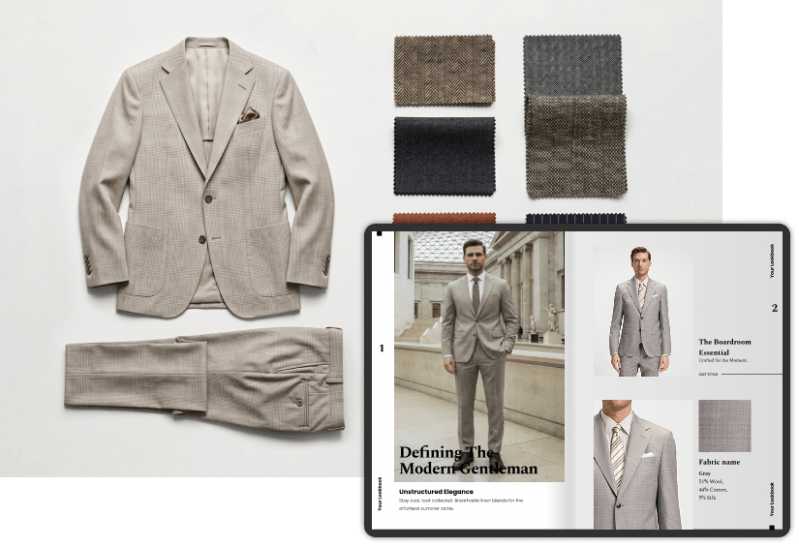
These three tools map onto the report’s new model with unusual neatness: the scanner serves recognition (the remembered body), the studio serves personalisation (co-creation), and the lookbook serves cultural capital (being written into the brand’s story).

The new rules of luxury don’t ask tailors, pattern makers, or designers to become something else. They hand the custom trade a better stage. The instinct this season shouldn’t be to make the work harder to buy. It should be to make the client harder to forget — known, recognised, and quietly certain they are one of the few.
Source: The Business of Fashion, “The Rise of Challenger Brands as Beacons of Exclusivity,” 14 July 2026 — read the original report.

