
Last month, we sent one of our own, Frank, to Danang, Vietnam, with a simple assignment: bring his own digital measurements to a local made-to-measure tailor and see what happens when they meet a shop’s own process. This is his account.

The shop Frank visited, A Dong Silk, is actually in Hoi An, the historic town now folded into greater Danang City, about a half-hour outside the center. Hoi An’s relationship with textiles goes back to the 16th and 17th centuries, when it was one of Southeast Asia’s busiest trading ports. Merchants from China, Japan, and Europe passed through, bringing fabrics, patterns, and techniques that shaped the town’s craft over generations. That history is still doing real work today: the old town is home to hundreds of tailor shops, some estimates put the number above 350, and most of them can turn around a full suit in a day or two, often at a fraction of what comparable custom tailoring costs in the West. A Dong Silk, founded in 1998, is one of the larger operations there, with multiple storefronts and a fabric selection built on that centuries-old reputation.
Frank, TG3D Studio
So before I left, I scanned myself and had a full set of digital measurements ready to bring along, and once I landed, the plan was simple enough: walk into the shop, hand over the numbers, order a suit, and see how the whole thing actually turned out. What I didn’t expect was how much of the story would end up being about a shoulder adjustment I’d made weeks earlier.
There was no master tailor or pattern maker in the room when I arrived. Instead, I was helped by store staff, the kind who spend all day translating what a customer wants into whatever a tailor downstream actually needs, turning something like “I want a modern fit” into an actual instruction: take in the waist by two centimeters, raise the armhole. They were fast, easy to work with, and clearly practiced at exactly that translation.
Most of the visit, though, had nothing to do with measurements at all. A Dong Silk’s fabric selection is large enough that picking a cloth took longer than being measured did, bolt after bolt of wool, cotton, and linen, organized by weight and weave rather than by price. Staff walked me through the practical trade-offs as we went:
I tried on finished samples in a few different cuts before committing to my own, and it’s arguably where a shop like this earns its reputation the most, not the technical fit, but making a wide, well-organized selection feel easy to navigate in one sitting. The whole suit, fabric included, came to $500.

Once we got to the actual fitting, I handed over my digital measurements, and the staff checked them carefully before going ahead and taking a full set of their own measurements by hand anyway, around 15 in total, jotting each one down as they went. That wasn’t a sign of distrust. It’s simply what they’re used to, and a way to make sure, the kind of double-check any careful shop builds into its habits regardless of what a client walks in with, and a returning local customer would have gotten the same manual re-measurement I did.
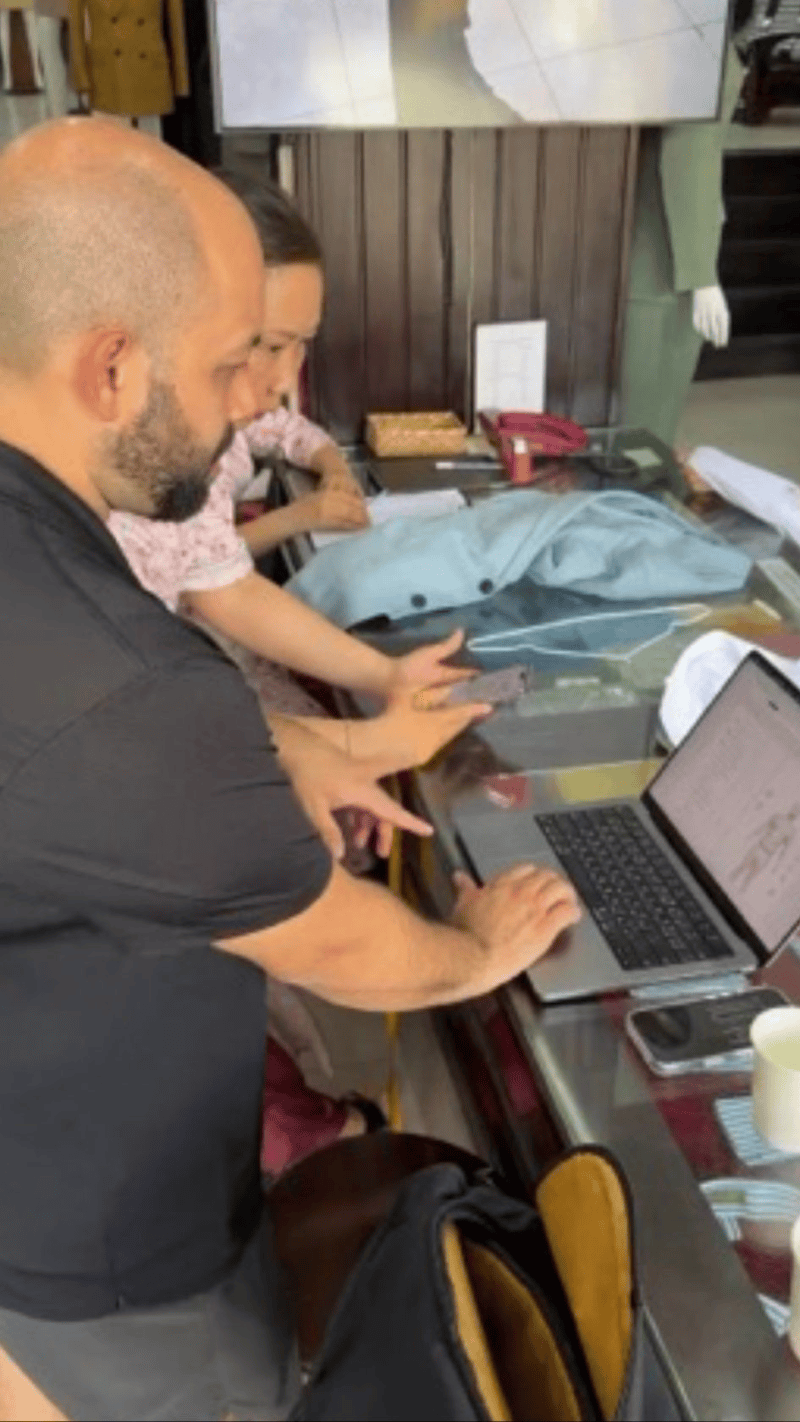
With everything recorded, the shop quoted four days to have the suit ready, timed to land the day before I was scheduled to leave the area.


I’d assumed my second visit would be picking up a finished suit, but it turned out to be a second fitting instead. The pants were right. The jacket was comfortable everywhere except the sleeves, which were noticeably off.

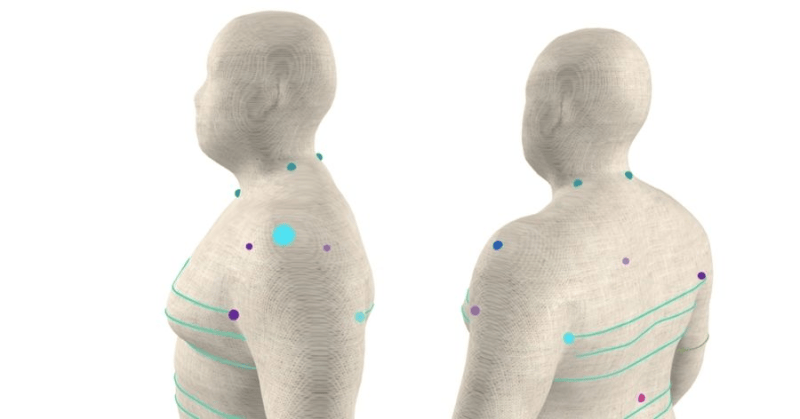
Here’s the part worth sitting with. I have wide shoulders, and before the trip I’d adjusted my shoulder points, the spot on a pattern where the sleeve seam meets the body, further outward on the digital scanning software than its default placement, to match my actual build rather than a standard one. That adjustment was correct, and it lived in the digital file, but it never made it to the people actually cutting my sleeve. Whatever the pattern makers worked from didn’t carry my specific shoulder-point change with it, and sorting out the sleeve took longer than usual as a result.
That left a real problem, since I was leaving the next day and the suit wasn’t finished. A Dong Silk fixed the sleeves, but there was no time left to wait around for it, so a friend of mine, visiting Hoi An the following week, picked up the finished suit and shipped it on to me. It’s exactly the kind of accommodation that makes a shop like this worth recommending, mistake included.
It would be easy to read this as a story about manual measurement being unreliable and digital being the fix, but that’s not quite what happened. My digital measurements were accurate, shoulder-point adjustment included. The problem wasn’t bad data, it was getting one specific, deliberate change to travel all the way from a measurement file to whoever was actually holding the shears. That’s a communication gap, not a data gap, and it’s an easy one to end up with even when everyone involved is doing their job well.
In retrospect, sending over a static list of numbers might have been the wrong move. If I’d shared the actual link to my 3D scan instead, staff could have shown the tailor the adjusted avatar directly, shoulder points and all, rather than translating it down into a printed measurement that could get lost in the handoff. Seeing the shape itself, not just reading a number off a page, might have made the difference.
It’s also not a Hoi An-specific problem. Anyone who has compared notes on ordering made-to-measure remotely runs into a version of the same thing: having more measurement data on hand doesn’t automatically mean every detail in it reaches the person who needs it. What matters isn’t how much you’re measuring, it’s whether a change from someone’s “default” numbers gets flagged clearly enough that it can’t be missed downstream.
If your shop uses any kind of digital measurement or scan alongside your own process, the practical fix isn’t more paperwork, it’s making sure a nonstandard adjustment travels as more than just a number. Attaching a shared link or QR code to the order, one that lets whoever’s cutting actually see the scan or avatar behind an unusual measurement, is a simple habit that would have caught my shoulder points before the fabric was cut, not after.
It’s worth being specific about who that protects. It’s not really the client standing in front of you every time, since a live fitting will surface a missed adjustment eventually. It’s the client you only see once, where a customization that only exists as a number on a page has no second chance to get noticed before the fabric is already cut.

Once the sleeves were corrected, the suit fit really well overall, and the fabric selection and staff at A Dong Silk are genuinely good reasons to recommend them, mistake and all. The real lesson has nothing to do with Hoi An specifically, and it’s the one worth carrying into your own shop: check whether an unusual measurement actually reaches the person doing the cutting, not just whether it’s on file somewhere.
We’d genuinely like to hear what you think of the fit and the workmanship.
This is a first-person account from Frank, a member of the TG3D Studio team, of one visit to one shop in Hoi An. It’s not a comprehensive review of Hoi An’s tailoring industry or of A Dong Silk specifically.

