
If you’re a master tailor, you probably already know most of this. But here’s the thing—this is perfect content to share with your trainees, employees, or team members. Better yet? Challenge them: “Can you answer all these correctly?” This simple checklist can become a powerful training and quality control tool.
Even if you’re experienced, a quick review never hurts. You might catch something you’ve been doing slightly off for years, or you’ll have talking points for when training the next generation of tailors.
Let’s be honest—most tailors think they’re measuring correctly. But when a customer comes back with a complaint about fit, or you spend extra time on alterations that should have been right the first time, it’s often because of a measurement issue.
The truth? Small measurement mistakes compound into big fit problems.
In this guide, we’re doing a quick—but thorough—review of how professional tailors should be taking body measurements. Whether you’ve been tailoring for 20 years or you’re still building your skills, this checklist will help you catch any gaps in your measurement process and take your craft to the next level..
Before we dive into the specifics, let’s understand why this matters:
The foundation of every great garment is great measurements. Period.
Before we review the 12 critical measurements, let’s establish the ground rules that apply to all measurements:
Now, let’s break down the measurements that matter most. We’ve reorganized these by importance and added some that are often overlooked.
Where to measure: Circumference around the neck approximately 3cm above the Center Back Neck and 1 cm above the Center Front Neck.

How to measure correctly:
Why it matters: Too tight causes discomfort and restricted movement; too loose looks sloppy. Critical for all upper body garments.
Common mistake: Measuring too loosely, thinking you’re being generous. A collar that’s even 1/2 inch too large will look unprofessional and gaps will be visible.
Where to measure: Circumference around the intersection of arm and shoulder that passes through the Shoulder Point.

How to measure correctly:
Why it matters: This is one of the most critical measurements for jacket and dress fit, yet it’s often relegated to “bonus” status. Armhole depth determines:
Common mistake: Completely ignoring this measurement or measuring it incorrectly. A bad armhole fit is often blamed on sleeve issues when the real problem is the armhole depth. This is especially critical for tailored jackets.
Where to measure: Sum of the curvature distance from the Center Back Neck Base point to the Shoulder Point and the Arm Length.

How to measure correctly:
Why it matters: Sleeves that are too short look unprofessional and uncomfortable; too long looks sloppy. This is one of the most visible measurements.
Why it’s not #1: While visible and important, it’s less critical than the structural measurements (chest, back length, shoulder width) that determine the overall fit of the garment.
Common mistake: Measuring from the middle of the shoulder rather than the shoulder bone junction. Also, failing to account for different sleeve lengths needed for different garment types (dress shirts vs. casual vs. athletic wear).
Before measuring shoulder width (or any shoulder-related measurement), you need to correctly identify the shoulder points. This is one of the most common sources of measurement error.

Why This Matters: Many tailors make the mistake of measuring to the ball of the shoulder (further down toward the armpit) instead of the true acromion point. This single error can make your shoulder width measurement 2-3 inches too large, completely throwing off jacket and sleeve fit.
Pro Tip: Once you’ve identified the acromion on one shoulder, use it as your reference for the other shoulder. Shoulder bones can be asymmetrical—one person might have slightly different shoulder points, so always measure from bone to bone, not from assumed points.
Where to measure: Across the back, from the outermost point of one shoulder bone to the outermost point of the other shoulder bone.

How to measure correctly:
Why it matters: This determines sleeve placement, jacket width, and overall upper body fit. Shoulder fit is one of the first things a customer notices when trying on a garment.
Common mistake: Measuring around the body instead of straight across the back. This can make measurements 2-3 inches too large. Also, some tailors measure the ball of the shoulder instead of the bone point.
Where to measure: Vertical curvature distance from Center Back Neck to Waist Line plus vertical line distance from the Waist Line down to the Crotch level.

How to measure correctly:
Why it matters: This measurement determines jacket length and the overall proportions of the torso. It’s especially critical for formal wear, blazers, and dress length calculations.
Why it’s in the top tier: Back length affects how everything else relates proportionally. Get this wrong, and the whole garment will look off balance, even if individual pieces fit.
Common mistake: Tailors often measure to the side seam instead of down the center back, which can add an inch or more. This is one of the most frequently misunderstood measurements.
Where to measure: Horizontally around the fullest part of the chest at nipple level, keeping the tape strictly parallel to the ground. Ensure the tape on the back does not sag or drop below the level of the tape in the front, as this is a frequent error that leads to oversized measurements.

How to measure correctly:
Why it matters: This is your foundation measurement for all upper body garments—jackets, shirts, blazers, dresses, and coats. A 1-inch error here compounds throughout the entire garment.
Common mistake: Tailors often measure too high (under the armpits) or too low, missing the actual fullest part of the chest. The nipple line is the standard reference point used in ISO 8559 body measurement standards.
Where to measure: Horizontally around the natural waistline—typically the narrowest part of the torso, usually at or slightly above the belly button and where the rib cage finishes.
How to measure correctly:
Why it matters: Critical for fit and silhouette. For tailored tops, the waist measurement determines the “taper” of the garment. If it is too tight, the fabric will pull across the stomach. If it is too loose, the garment loses its shape, creating an unflattering, oversized appearance that hides the wearer’s natural proportions.
Common mistake: Measuring where the customer wants their waist (e.g., low-rise jeans) instead of at the natural anatomical waist. Always measure the natural waist, then adjust based on the garment type.
Where to measure: Around the fullest part of the hips and buttocks, keeping the tape parallel to the ground.

How to measure correctly:
Why it matters: Essential for pants, skirts, dresses, and fitted coats. This measurement affects how the garment sits on the body and whether it provides enough room for movement.
Common mistake: Measuring at the wrong height or in a way that misses the actual fullest point due to body asymmetry. Some tailors also measure too loosely here, thinking they’re being generous, which actually results in poor fit.
Where to measure: Summed curvature distance from front pants girth across crotch and ending vertically with curvature back to the back pants girth on the back.

How to measure correctly:
Why it matters: This is arguably the most overlooked measurement for trousers and jeans, yet it’s critical for:
Why it’s often missed: Many tailors only measure inseam, assuming rise will work itself out. It won’t. This is a major source of fit problems.
Common mistake: Not measuring rise at all, or measuring it inaccurately. A 1-inch difference in rise completely changes how trousers fit.
Where to measure: Line distance from the 1/3 of the position between Front Crotch Point and Back Crotch Point (closer to the Front) down to the Ankle Line.

How to measure correctly:
Why it matters: The inseam is one of the easiest measurements to see wrong, and customers notice immediately when it’s off.
Common mistake: Not accounting for the shoes they’ll wear, or measuring for too much or too little break at the hem. Also, measuring from the side seam instead of the crotch point.
Where to measure: From the side seam where it meets the waistline down to the ankle or floor, depending on the garment.

How to measure correctly:
Why it matters: Helps verify that inseam and rise proportions are correct. Also critical for skirts, dresses, and determining overall garment length.
Common mistake: Not measuring this for women’s garments where length is critical. Some tailors also measure from the natural waist rather than from where the waistband of the final garment will sit.
Where to measure: Horizontal circumference around the thigh approximately 3cm under the Crotch.

How to measure correctly:
Why it matters: Prevents the common problem of trousers that fit the waist and rise perfectly but are way too tight at the thigh, or conversely, are baggy there when they should be fitted.
When it’s critical: Fitted dress pants, athletic wear, tailored casual pants. Less important for loose-fit or relaxed trousers.
Common mistake: Measuring only the fullest point without considering that thigh fullness varies greatly by body type and that some customers prefer different levels of taper below the thigh.
These additional measurements help fine-tune fit for specific garment types:
Before you finalize any measurements, do a quick review:
❌ NOT doing these?
[ ] Measuring with customer in full posture with proper breathing
[ ] Documenting every measurement immediately
[ ] Measuring with the right tools (flexible, properly maintained tape)
[ ] Taking both inseam AND rise for trousers
[ ] Measuring armhole depth for jackets and dresses
[ ] Accounting for the shoes they’ll wear
[ ] Asking follow-up questions about fit preferences
[ ] Comparing measurements to previous fittings for repeat customers
[ ] Using a consistent method every time
If you’re not doing these things, that’s likely where your fit problems are coming from.
Getting the right measurements is just the first step. The real magic happens when you combine accurate measurements with:
But none of that matters if your measurements are off from the start.
In today’s world, advanced 3D body measurement technology from TG3D Studio can help:
While these tools are becoming increasingly available, the fundamental principles we’ve reviewed here remain the same: understand what you’re measuring, measure correctly, and document everything.
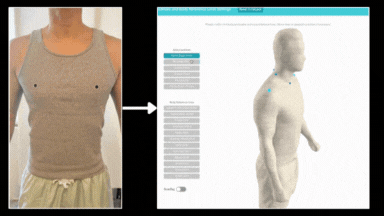
Bonus 3D Body Scanner Tool: ScanTag
ScanTag allows you to customize body measurement points. By placing marker stickers on specific areas of your customer’s body before scanning, you can manually align those points using our 3D Visualizer after the scan is complete- providing more flexibility and precision for custom measurements.
Here’s what to do right now:
The goal isn’t perfection—it’s consistency and accuracy. Small improvements in how you measure will directly translate to fewer fit problems, happier customers, and less time spent on alterations.
Because at the end of the day, great tailoring starts with great measurements.
If you’re ready to take your tailoring to the next level, discover how TG3D Studio’s 3D body measurement technology can help you capture measurements faster, more accurately, and with virtually no human error. Our platform empowers tailors to:


